Albinism in Tanzania Through Time: History, Culture, and the Fight for Change
How attitudes toward people with albinism in Tanzania have shifted across generations — from ancient folklore to today's advocacy movement.
Read article →Why teachers with albinism are hit hardest by chalk and blackboards, and how swapping to whiteboards removes one of their biggest daily obstacles.
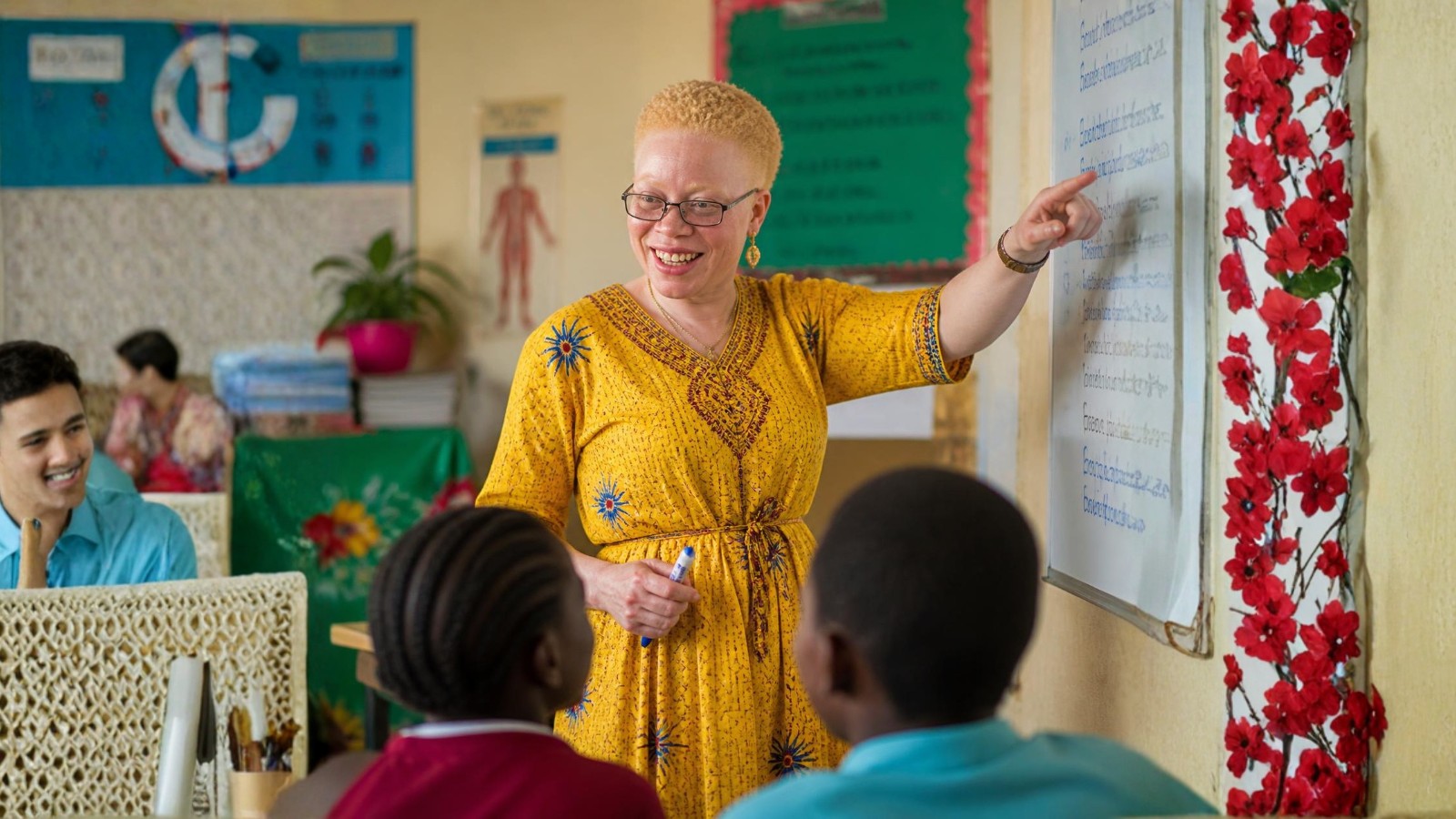
Walk into almost any classroom in rural Tanzania and you'll see the same scene that's played out for generations: a teacher standing at a blackboard, chalk in hand, writing out today's lesson while a fine cloud of white dust drifts through the air. For most teachers, it's just an old, slightly annoying habit of the job. But for teachers living with albinism, that same blackboard can turn every single school day into a genuine struggle — one that has very little to do with teaching ability and everything to do with biology.
Albinism is a genetic condition that means the body produces little to no melanin — the pigment that gives skin, hair and eyes their colour. In Tanzania, albinism is far more common than in most of the world: roughly 1 in every 1,400 to 2,600 people has it, compared to about 1 in 20,000 globally. So this isn't a rare, abstract issue. It affects a real and visible part of the teaching workforce.
What most people don't realise is that melanin doesn't just colour your skin — it's also essential for how your eyes develop and function. Without it, people with albinism almost always have significantly reduced vision, along with light sensitivity and involuntary eye movements that make focusing on anything even harder. This isn't something glasses can simply fix. It's a structural difference in the eye itself.
Now put that person in front of a blackboard.
Most of the documented evidence on this comes from research into students with albinism struggling to see the board clearly — a challenge confirmed by multiple independent studies across Tanzanian classrooms. But the biology behind it doesn't stop at the school desk — the same low vision, light sensitivity and glare sensitivity affect anyone with albinism standing at the front of the class too. If it makes the board hard to read from a seat ten feet away, it makes writing on that same board, up close, for six hours a day, every working day of a career, considerably harder still.
A blackboard relies on contrast — white or yellow chalk against a dark, often glare-prone surface — usually under Tanzania's intense equatorial light pouring through windows or a poorly lit classroom. For a teacher with low vision and light sensitivity, this is close to a worst-case combination:
None of this affects a teacher's intelligence, knowledge, or dedication. It's purely physical. And yet it can quietly shape a teacher's confidence, energy levels, and even how students perceive them — through no fault of their own.
Most of the research and awareness around albinism and education in Tanzania focuses on students — and rightly so, since only half of children with albinism complete primary school, and just 10% reach secondary school. But teachers with albinism carry a version of the same burden with far less support and far less attention. They're expected to be the ones at the front of the room, in the brightest, most exposed spot in the building, using a tool that actively works against their biology — for their entire working life, not just a few school years.
It's a bit like asking someone with a severe hearing impairment to run a classroom using a hand-cranked megaphone with a broken speaker, and then quietly wondering why it's exhausting for them.
This is exactly where TASPO's "Whiteboards for All" project makes such a meaningful difference. Swapping blackboards and chalk for whiteboards and markers isn't just a cosmetic upgrade — for a teacher with albinism, it directly removes several of the biggest daily obstacles:
It won't solve every challenge a teacher with albinism faces — sun exposure, glare from windows, and broader awareness in the community still matter enormously. But removing chalk and blackboards from the equation removes one of the most persistent, physical, daily sources of struggle in their working life. Sometimes the most powerful support isn't a grand programme — it's fixing the tool that's been quietly working against someone for years.
Albinism in Tanzania already comes with serious challenges — from safety concerns to social stigma to limited access to skin and eye care. Adding an outdated classroom tool that actively worsens the condition's core symptoms, day in and day out, is a burden that simply doesn't need to exist anymore.
Whiteboards are a small, practical, affordable change. But for a teacher with albinism standing at the front of a Tanzanian classroom, it can mean the difference between a school day that wears them down and one where they can simply focus on what they do best: teaching.
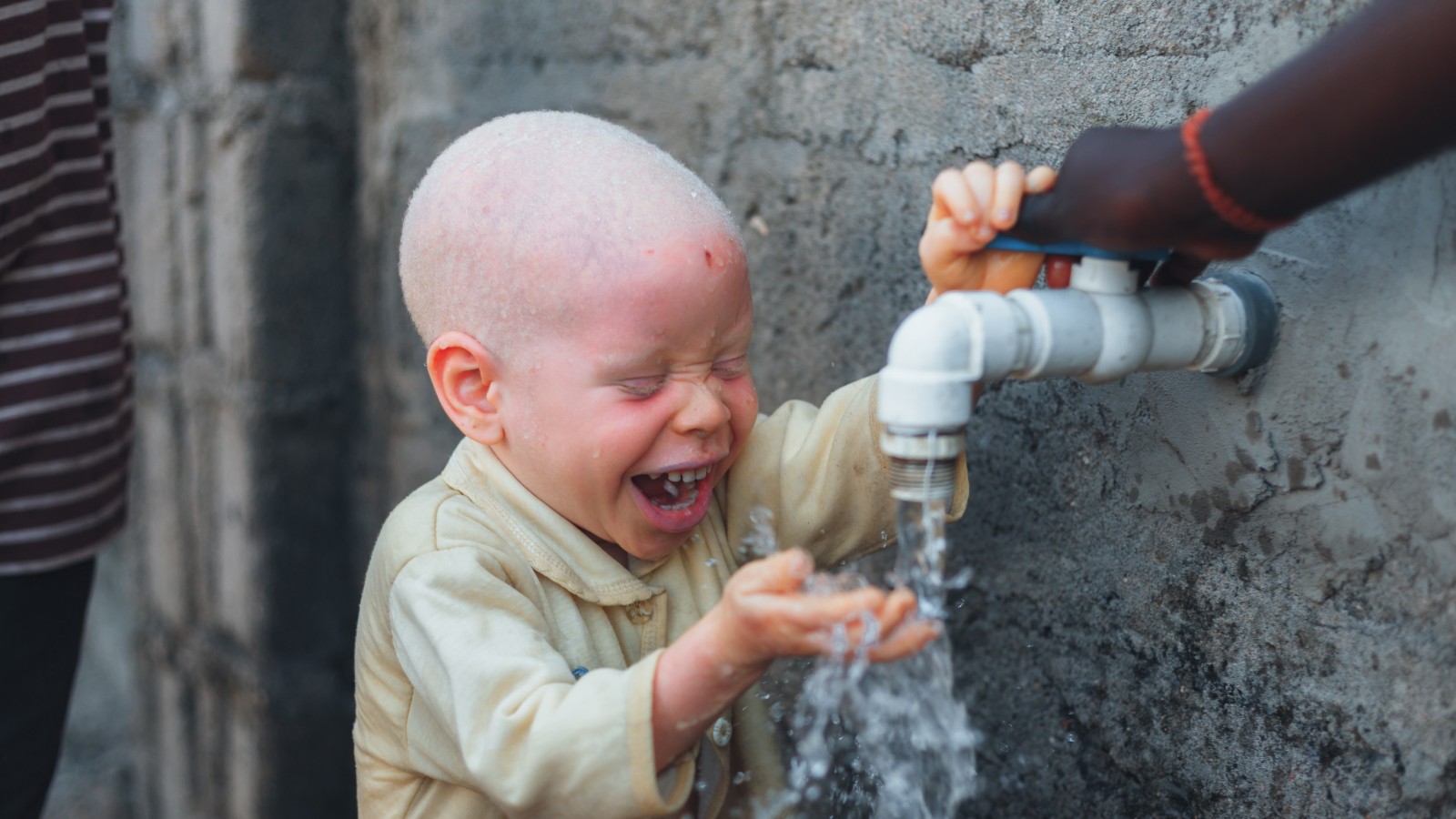
How attitudes toward people with albinism in Tanzania have shifted across generations — from ancient folklore to today's advocacy movement.
Read article →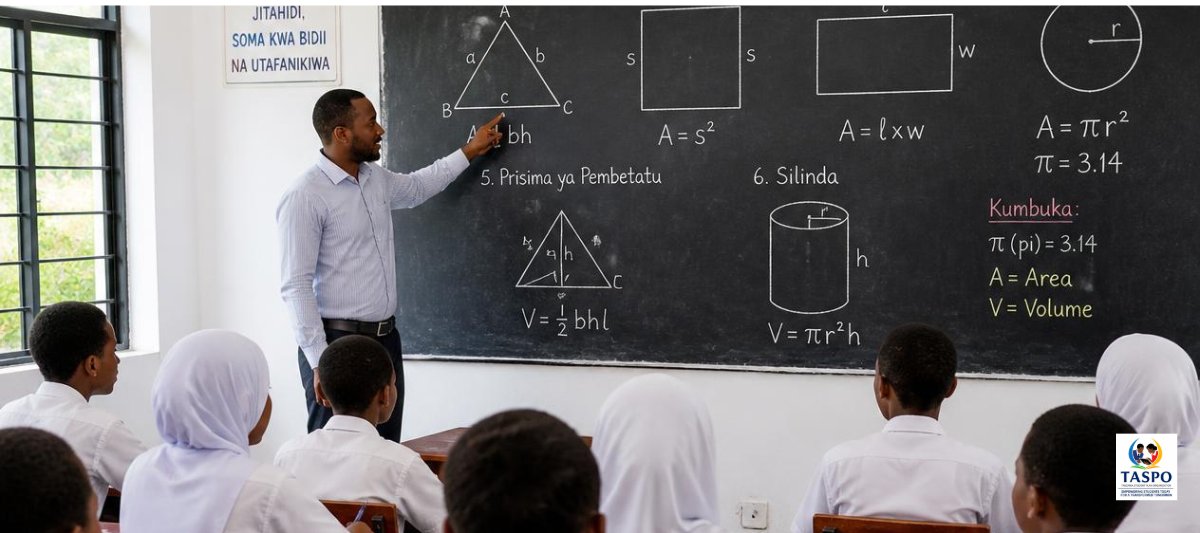
How chalk dust affects the health of students and teachers in classrooms without whiteboards, and why switching away from chalk matters.
Read article →Whether you give, partner, donate equipment or simply share our story, you help Tanzanian students learn in better conditions.