
When the Blackboard Becomes a Barrier: Why Teachers with Albinism Suffer Most
Why teachers with albinism are hit hardest by chalk and blackboards, and how swapping to whiteboards removes one of their biggest daily obstacles.
Read article →How a simple swap from chalk to whiteboards gives pupils cleaner air and clearer lessons — and how your donation makes it happen.
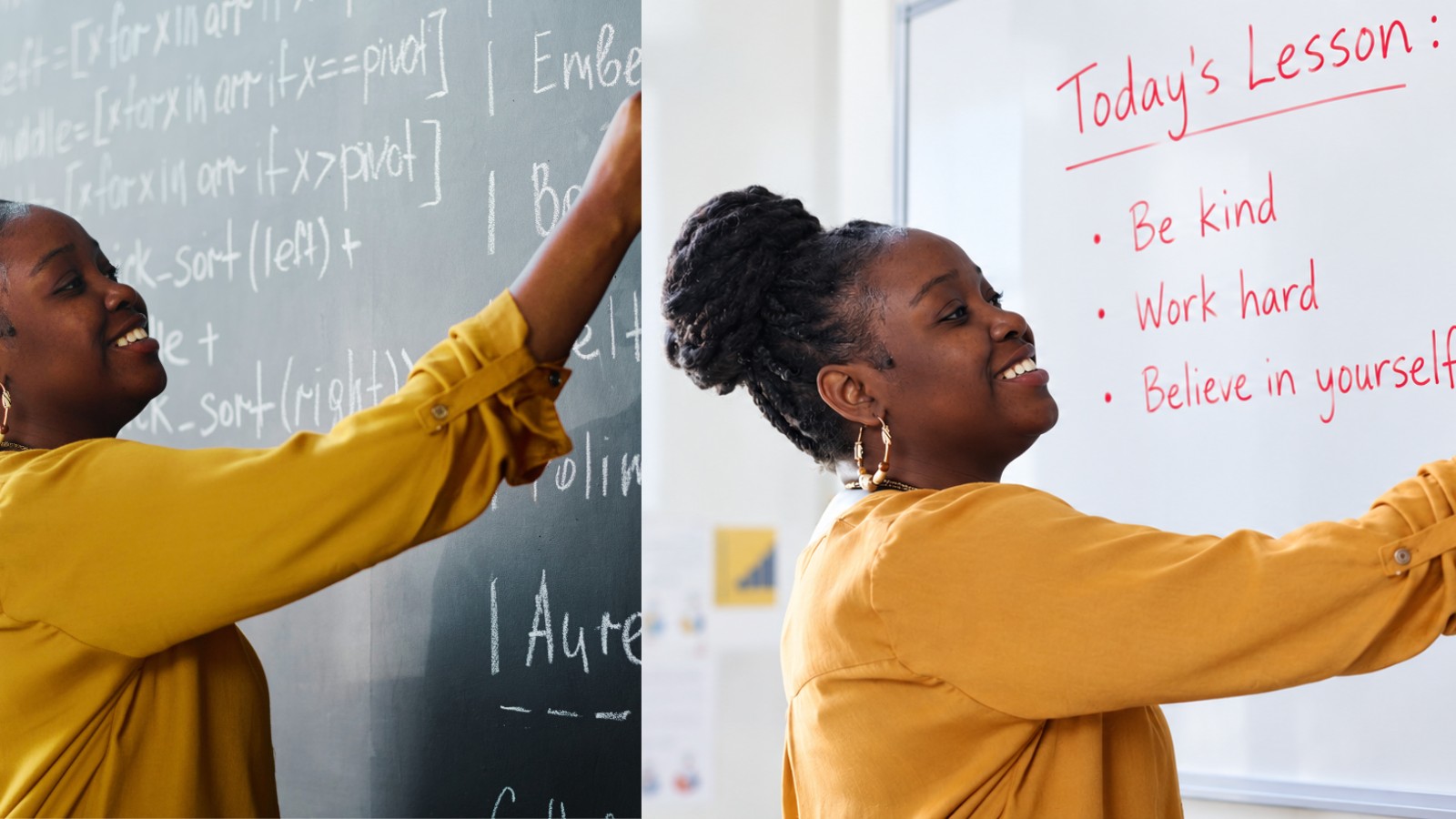
Picture a classroom in rural Tanzania. Sixty, sometimes a hundred, children are squeezed onto wooden benches. At the front, a teacher writes the day's maths lesson on a worn blackboard. Every stroke sends a fine cloud of white dust into the air. By midday it's on the teacher's hands, in her hair, and in the air that every child in the room is breathing.
In front of each child sits a small personal slate, also written on with chalk. More dust, more rubbing out with bare fingers, more squinting at faded letters.
This is the everyday reality in thousands of classrooms. It's also something we can change, simply and affordably. That's what TASPO's Whiteboards for All project is about.
Chalk has been the backbone of classroom teaching for generations, so it's easy to overlook its downsides. But anyone who has spent a full day at a blackboard knows the feeling: dry hands, itchy eyes, a tickly throat.
Chalk dust is an irritant. It isn't considered highly toxic, but breathing it in day after day can irritate the eyes, nose and throat, and it can make things harder for children and teachers with asthma, allergies or other breathing sensitivities. In a small, crowded, often poorly ventilated classroom, the dust has nowhere to go.
Teachers feel it most. They stand closest to the board, often for six or more hours a day, year after year. For many, a sore throat and a cough are simply part of the job. They shouldn't have to be.
Swapping a blackboard for a whiteboard might sound like a small upgrade. In practice, it changes the whole feel of a classroom.
Whiteboard markers don't produce dust. That means less irritation, fewer coughs, and a healthier space to learn and teach in, especially for the youngest children and anyone with breathing difficulties.
Many rural blackboards are painted directly onto walls or boards and fade, crack or turn grey over time. Chalk on a worn surface is hard to read from the back of a packed room. A bright white surface with dark ink gives far sharper contrast, so the child on the back bench sees the same lesson as the child at the front.
With coloured markers, teachers can highlight key words, draw clearer diagrams, colour-code maths problems and make maps and science drawings far easier to follow. It sounds simple, but it helps children understand faster and remember more.
Tanzanian primary pupils commonly practise on small personal chalk slates at their desks. Replacing these with mini whiteboards means children can write, check and wipe clean quickly, without covering their hands, uniforms and exercise books in dust. Teachers can also ask the whole class to hold up their answers at once, which is one of the quickest ways to see who has understood and who needs a little more help.
A good whiteboard, looked after properly, lasts for years. There's no repainting of worn blackboard surfaces and no constant restocking of chalk that snaps and crumbles in the heat.
This one is harder to measure but very real. A bright, clean classroom tells children that their education matters. Teachers feel more professional. Parents notice. Small changes to a learning space can lift the mood of an entire school.
We believe in doing this properly, not just handing over equipment and leaving. Whiteboards need a steady supply of markers and erasers, and markers run dry. That's why the Whiteboards for All project doesn't stop at the board itself. This is also where regular giving is so valuable: a small monthly donation keeps classrooms stocked long after the boards go up.
This is the part we love, because it's where you come in. You don't need to give a fortune to change a classroom. Here's what your support can do:
Every donation goes towards sourcing, shipping and installing whiteboards in schools that need them most. As a logistics-led organisation working between Europe and Tanzania, TASPO coordinates the equipment, transport and customs side directly, so your money goes where it's meant to go.
Education is one of the most powerful tools a child in rural Tanzania has for building a better future. Many of these children walk long distances to school, often sit in overcrowded rooms, and learn with very little. The least we can do is make sure the air they breathe is clean and the lesson on the board is clear.
A whiteboard won't solve every challenge rural schools face. But it's a practical, visible, lasting improvement that pupils and teachers feel from the very first day. That's the kind of change we believe in.
Whether you give once, give monthly, or fundraise with your company, school or community, you'll be helping a classroom move from chalk dust to clear lessons.
Want to get your business involved? TASPO works with European partners and donors on equipment and supply donations. Contact us to find out how.
Chalk and blackboards are cheap to buy upfront and have been the standard for decades. Many rural schools simply don't have the budget to switch, which is where donations make the difference.
Chalk dust is generally considered an irritant rather than a serious toxin. Breathing it in regularly can irritate the eyes, nose and throat, and it can be particularly uncomfortable for people with asthma or allergies. Crowded, poorly ventilated classrooms make exposure higher.
Markers are an ongoing cost, which is why TASPO plans for supply as part of the project. Regular donations help keep classrooms stocked.
Around 15 USD covers a whiteboard and marker for one classroom.
Yes. TASPO coordinates equipment donations from European partners and handles the shipping and customs to Tanzania. Get in touch to discuss.
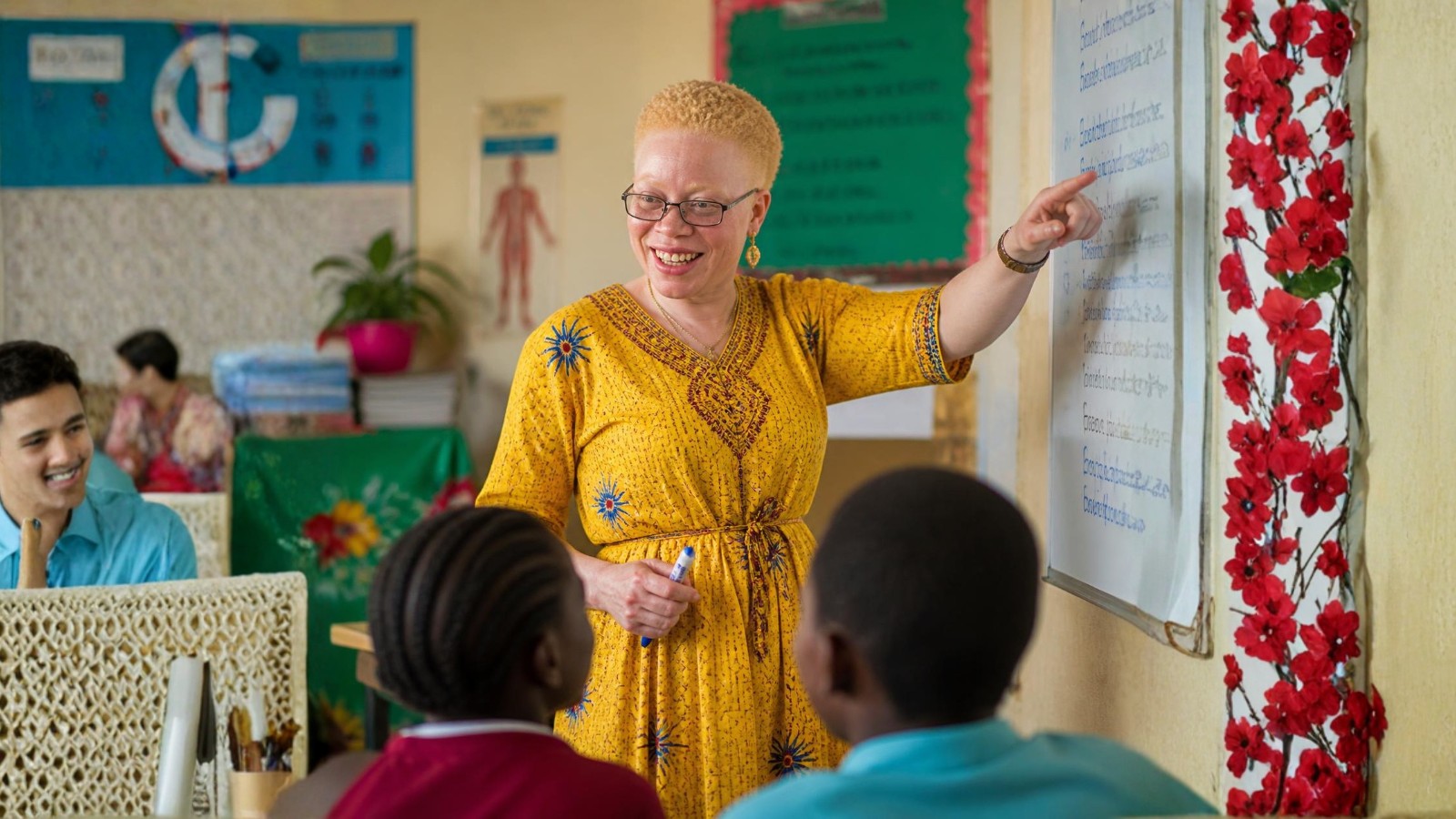
Why teachers with albinism are hit hardest by chalk and blackboards, and how swapping to whiteboards removes one of their biggest daily obstacles.
Read article →
How attitudes toward people with albinism in Tanzania have shifted across generations — from ancient folklore to today's advocacy movement.
Read article →Whether you give, partner, donate equipment or simply share our story, you help Tanzanian students learn in better conditions.