
From Chalk Dust to Clear Lessons: Why Rural Tanzanian Classrooms Need Whiteboards
How a simple swap from chalk to whiteboards gives pupils cleaner air and clearer lessons — and how your donation makes it happen.
Read article →The real story of albinism in Tanzania — the discrimination, the danger, and the everyday impact on health and life, and how change is happening.
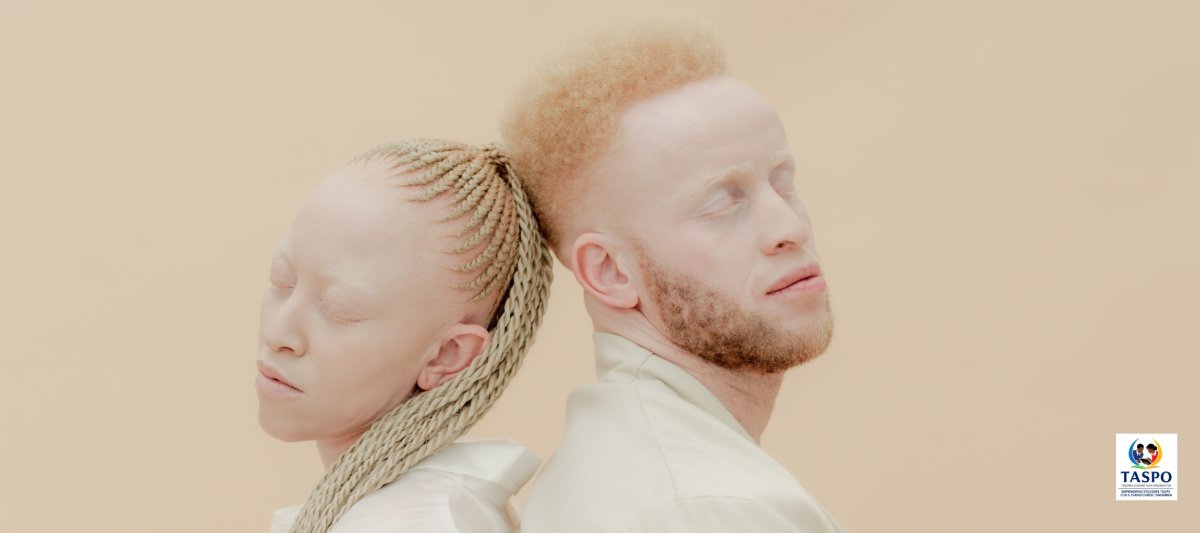
Imagine being born into a world that fears you simply because of the colour of your skin. Not because of anything you've done, said, or believed — just because your body doesn't produce melanin the way most people's does. For thousands of people in Tanzania living with albinism, that isn't a thought experiment. It's daily life.
This is a hard story to tell, but it's an important one. Albinism in Tanzania sits at the crossroads of genetics, superstition, poverty, and human rights — and understanding it means looking honestly at both the pain people have endured and the progress that's slowly being made.
Let's start with the basics, because so much of the suffering people with albinism face comes from simple misunderstanding.
Albinism is a genetic condition. It's not contagious, it's not a curse, and it's not caused by anything a mother did during pregnancy. It happens when a person inherits a gene from both parents that limits or stops the body's production of melanin — the pigment responsible for the colour of skin, hair and eyes. Two parents with completely normal-looking skin can each carry the gene without knowing it, and if both pass it on, their child will be born with albinism. There's roughly a one-in-four chance of this happening when both parents are carriers.
Globally, albinism is rare — occurring in something like 1 in 20,000 people. But in Tanzania, the numbers are strikingly different. Estimates suggest the condition affects somewhere around 1 in 1,400 people, making it one of the highest rates of albinism anywhere on earth. In some communities, particularly around Lake Victoria, it's common enough that it's part of everyday life — which makes the discrimination people face even harder to understand, and even harder to justify.
To understand why people with albinism in Tanzania have suffered for generations, you have to understand the myths that took root long before modern medicine explained the condition.
In some communities, people with albinism have been viewed through two contradictory and equally damaging lenses. On one hand, they've been seen as cursed — a bad omen, a punishment, something to be feared or hidden away. On the other, a darker and far more dangerous belief has spread: that their body parts hold magical power. Witch doctors have claimed that potions made from the skin, hair, bones or limbs of a person with albinism can bring wealth, luck or political success to whoever uses them.
That belief has fuelled an underground trade that is as tragic as it sounds. Since reports first drew international attention around 2007, hundreds of attacks and killings have been documented across Tanzania and neighbouring countries. Children have been particularly targeted, partly because of the horrifying belief that their "purity" makes their body parts more potent. Some families, terrified for their children's safety, have sent them away to live in guarded shelters, sometimes hundreds of kilometres from home, just so they can grow up without living in constant fear.
It's important to say clearly: these beliefs have no basis in fact. Albinism is nothing more than a difference in pigmentation. But myths, once they take hold in a community, can be far harder to remove than the truth is to establish.
While the worst waves of violence made international headlines over a decade ago, the danger hasn't disappeared — it has simply become quieter and, in some ways, harder to track. Attacks still happen. As recently as 2024, a young child with albinism was abducted and killed in a rural region of Tanzania, a painful reminder that the threat is far from history.
In response to years of advocacy from human rights groups, something significant happened in February 2025: the African Court on Human and Peoples' Rights ruled that Tanzania had failed to adequately protect people with albinism, holding the government accountable and ordering nationwide awareness campaigns. It's a landmark decision — not because it fixes the problem overnight, but because it forces a national conversation that can no longer be ignored.
Tanzania has also taken some direct action over the years. Government crackdowns have led to hundreds of arrests of witch doctors and traffickers linked to attacks. Temporary shelters have been built to protect the most vulnerable children. And a growing number of local and international organisations are working to shift public understanding through education, radio campaigns, and community outreach.
Progress is real, but it's slow — and it depends on changing beliefs that, in some cases, have been passed down for generations.
Further reading on the February 2025 ruling:
Beyond the violence and stigma, there's another side to this story that gets far less attention: what albinism actually does to a person's body, and how that shapes daily life.
Melanin isn't just about colour — it's the body's natural shield against the sun's ultraviolet rays. Without it, skin burns far more easily and far more severely than most people ever experience. In a country as sunny as Tanzania, this isn't a minor inconvenience; it's a serious, lifelong health risk. Repeated sun exposure without protection dramatically increases the risk of skin cancer, and tragically, skin cancer has become one of the leading causes of early death among people with albinism in East Africa. Many simply don't have reliable access to sunscreen, wide-brimmed hats, or lightweight protective clothing — items that are basic necessities, not luxuries, for someone with this condition.
Melanin also plays a crucial role in how the eyes develop before birth. Because of this, most people with albinism experience some degree of visual impairment — blurred vision, involuntary eye movements (known as nystagmus), extreme sensitivity to bright light, and difficulty judging distance. Glasses can help, but they rarely correct vision completely. For a child trying to read a blackboard at the back of a crowded classroom, or a farmer trying to spot a snake in the grass, this isn't a small limitation. It shapes what jobs are realistic, how safely someone can move through daily life, and how well a child can keep up in school.
One of the most important facts that still isn't widely understood is this: albinism has no effect whatsoever on intelligence, cognitive ability, or life expectancy when the condition is properly managed. The challenges people face come entirely from the environment around them — sun exposure, lack of accessible healthcare, and social exclusion — not from any inherent limitation. It's a distinction worth repeating, because so much stigma is built on the false idea that looking different means being different in some deeper, lesser way.
Perhaps the hardest impact to measure is the psychological one. Growing up being stared at, whispered about, excluded from school, or kept indoors by worried parents takes a real toll. Many children with albinism in Tanzania miss out on education entirely, either because families fear for their safety or because schools aren't equipped to support their visual needs. That lost education has ripple effects for the rest of a person's life — fewer job opportunities, less independence, and a harder path out of poverty.
What makes life particularly hard is that these challenges rarely arrive alone. A child with poor eyesight who also can't safely play outside during the brightest hours of the day loses out on both learning and ordinary childhood experiences. A young adult who wants to work outdoors — in farming, construction, or fishing, some of the most common jobs in rural Tanzania — faces a direct conflict between earning a living and protecting their skin. Even something as simple as walking to school or fetching water can mean hours of unprotected sun exposure for a family that can't afford sunscreen or the right clothing. None of these barriers exist because of any flaw in the person — they exist because the environment, the economy, and the healthcare system weren't built with their needs in mind.
Regular skin checks and eye examinations are recommended for people with albinism, ideally every six months, to catch problems early. In cities like Dar es Salaam, that kind of specialist care exists. In rural villages, it often doesn't. Families may need to travel long distances, take time off work, and pay for transport just to see a dermatologist or ophthalmologist — an expense that puts preventative care out of reach for many, even when the will to seek it is there.
It would be easy to end a story like this on a note of despair, but that wouldn't be the whole truth. Tanzania is home to a growing, vocal community of people with albinism who are refusing to be defined by fear.
Places like Ukerewe Island in Lake Victoria have become known as safe havens, where people with albinism live openly, organise cultural events, and raise awareness rather than hide. Survivors of attacks have become powerful advocates, speaking at the United Nations and in Tanzanian parliament. Local organisations are training dermatologists and distributing sunscreen in rural communities where it was previously unavailable. Schools are slowly being encouraged to make simple accommodations — seating a child closer to the board, allowing hats indoors, adjusting how information is presented — that can make an enormous difference to a child's education.
None of this erases the suffering of the past, and it doesn't mean the danger is gone. But it does mean the story isn't a fixed, hopeless one. Public attitudes can shift. Laws can be enforced. Children can be protected and educated. It has already started happening — just not yet fast enough, and not yet everywhere.
It's tempting to read a story like this and see it as distant — a problem belonging to one country, one culture, one set of beliefs. But at its heart, this is a universal story about what happens when fear and misinformation are allowed to define how we treat people who look different. Every country has its own version of this struggle, even if it doesn't look the same on the surface.
Supporting education, healthcare access, and community awareness in Tanzania isn't charity in the old-fashioned sense of the word — it's an investment in a future where a child's life isn't shaped by superstition, and where a genetic difference is simply that: a difference, not a danger.
Albinism is purely genetic and inherited — it cannot be caught or spread in any way. It occurs when a child inherits a specific gene variant from both parents.
Researchers believe a combination of genetic factors within certain populations and higher rates of carrier parents has led to an unusually high prevalence in Tanzania, especially in communities around Lake Victoria.
With proper sun protection and regular health check-ups, people with albinism can expect a normal lifespan. The higher rates of early death seen in parts of Africa are linked to preventable skin cancer from unprotected sun exposure, not the condition itself.
Supporting organisations that provide sunscreen, protective clothing, education, and community awareness programmes makes a direct, measurable difference. Long-term change also depends on continued advocacy, legal accountability, and education that challenges harmful myths at their root.
Sadly, yes, although far less frequently than during the peak of international attention in the late 2000s and early 2010s. Continued vigilance, legal enforcement, and community education remain essential.
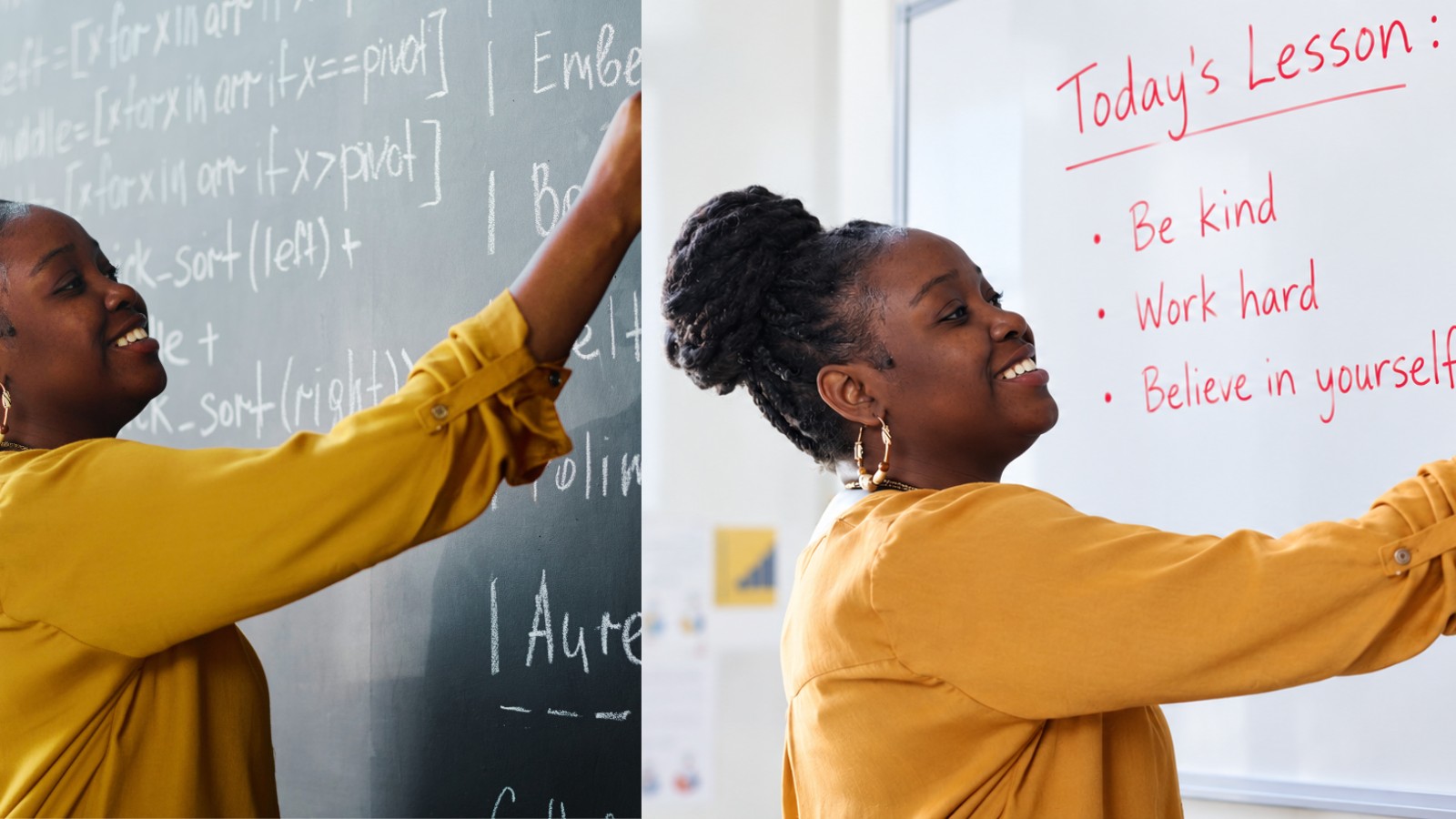
How a simple swap from chalk to whiteboards gives pupils cleaner air and clearer lessons — and how your donation makes it happen.
Read article →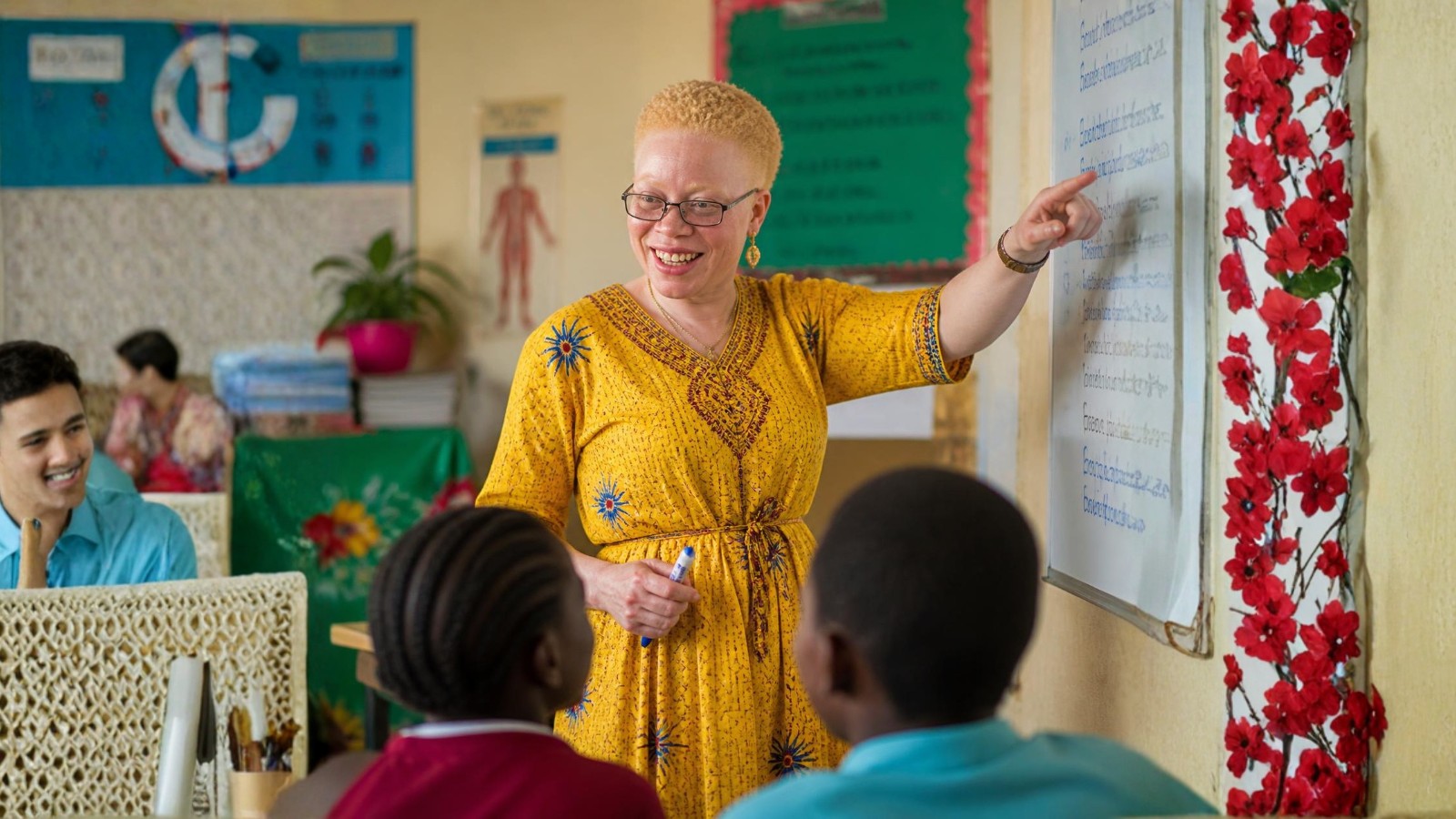
Why teachers with albinism are hit hardest by chalk and blackboards, and how swapping to whiteboards removes one of their biggest daily obstacles.
Read article →Whether you give, partner, donate equipment or simply share our story, you help Tanzanian students learn in better conditions.